
Menu
Septic system emergencies can happen at a moment’s notice, and usually without warning. Imagine having to deal with a septic tank issue during a celebration, right before you go to work, or in the middle of the night. This is why it is crucial that you schedule septic systems’ preventative maintenance.
Don’t let faulty plumbing interrupt the flow in your business or home. Our team at Skelcher-Milani we pride ourselves on providing you with superior customer service, which includes making sure that your system is in perfect condition.


At Skelcher-Milani, our team specializes in aeration, sewer, and septic services. We are able to perform all types of septic repairs and installations. We understand that some problems can start without warning, and we want you to know that scheduling preventative maintenance with us will allow for these issues to be less frequent.
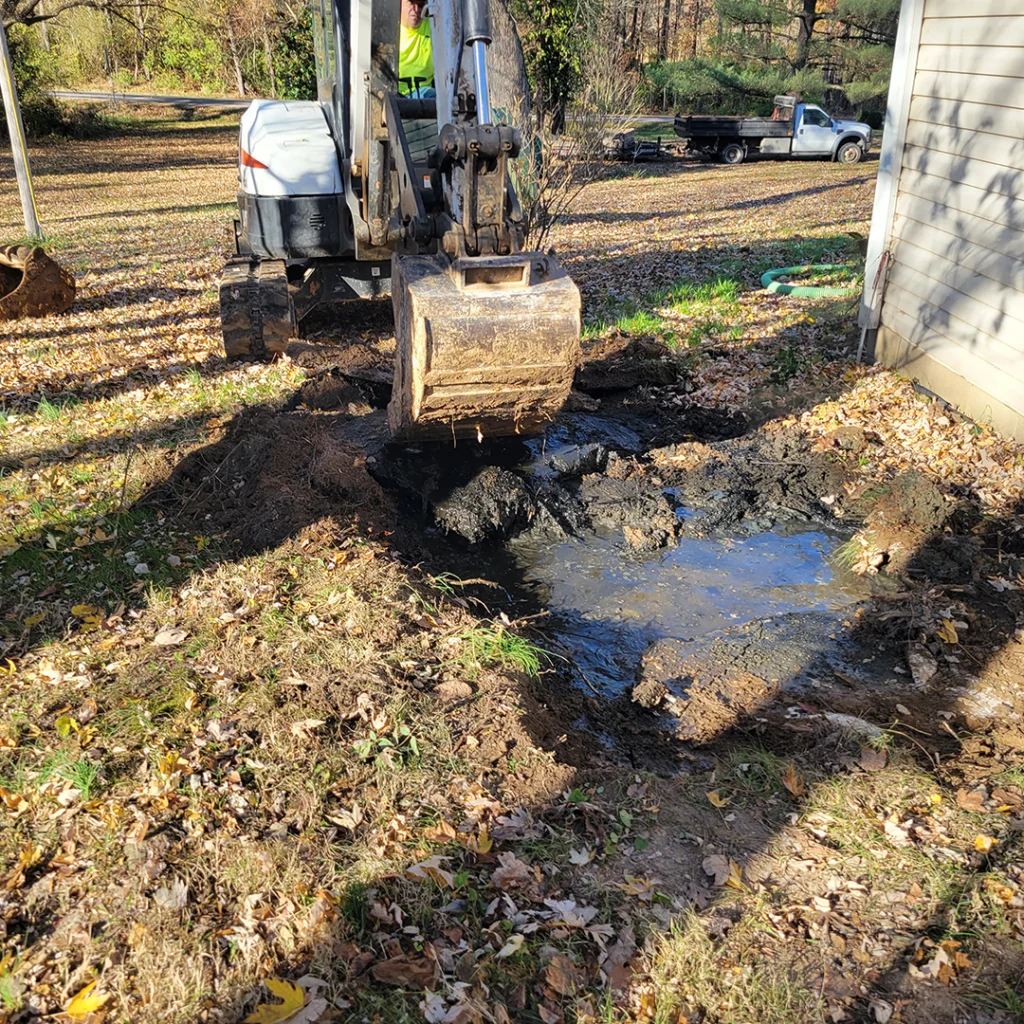
As most components of the system are buried underground there is not much concern with freezing in Southern Illinois. Septic tanks with leach fields are fully buried and not a concern. Aeration systems, sand filter systems, lagoon systems all have surface discharges and can be affected. The only part I have seen become an issue is the discharge pipe.
Though it is rarely a problem in this area It could happen in installations where the discharge pipe is open to the blast of the north winds, water can slowly freeze and build up at the discharge to the point of blocking a 4 inch pipe with ice. Knocking out the ice blockage or cutting off the exposed discharge pipe to the point where soil covers it can solve the problem temporarily and restores water flow.
There should be a minimal amount of pipe sticking out of the ground as exposed pipe can freeze the water running out of it. Covering the exit of the discharge pipe with 2 inches of soil, a scrap of carpet, a pile of fallen leaves, even a cardboard box will block the freezing wind and prevent the pipe from freezing up completely. Covering the end of the pipe is a wintertime only practice as you want water to flow freely from the pipe and not be blocked by debris or encourage root growth in the pipe in milder or hot weather.
It takes a really cold weather front to freeze a discharge, but watching the discharge pipe in bitter cold could head off a totally blocked drain line.
Heavy rain can raise the water level in the drain field trenches and cause slow drains in some instances. Snowmelt in southern Illinois is not massive enough to affect the leach fields to a great degree. In most instances no effects to the system will be noticed. We do maintain a few systems that have been installed in low lying areas that flood the aeration systems in heavy rain but are fine after the rain stops and recedes away from the drain line discharge site. All you can do is turn off the alarm and wait for the water to go down before restoring power to the system returning it to normal operation.
Yes, It is better to plant trees away from any septic tank or aeration system component as feeder roots, if not caught early, can force their way into tanks and pipes causing blockages and in extreme cases structural damage to a tank. Any woody shrub, tree, and some grasses and vines can cause problems. Cypress, Pine, Willow, trees are especially aggressive in root intrusion.
Short answer, NO. The salts and chemicals used in water softeners can be detrimental to bacteria in septic tanks and aeration systems. The state of Illinois requires a separate discharge line for pools and water softeners. The water softener drain lines can be routed around an aeration system as a separate vented drain line and connected into the septic drain line downstream of the tank and any infiltration. It is not suggested to drain it into a seepage field, sand filter, or lagoon.
Most household chemicals are reasonably safe when used with moderation. Excessive use of anti-bacterial cleaners can affect the bacteria colony in the tank when used in large quantities. Bleach, Ammonia, and commercial cleaning products are ok to use as long as you limit how much is dumped down the drains. Bleach used in laundry is a small amount in normal use. I suggest throwing mop water outside rather than dumping it down in the toilet. Chemicals all have their trade offs so use moderation and don’t worry about 100% safe products.