
Menu
No matter, if you are needing to replace an older system that is worn down or you are building a brand-new home and need a new system installed, you can depend on our team at Skelcher-Milani to make sure your system gets installed properly. Even if you need a new leach line installed, we are able to tackle the job. Nothing is too big or too small for our team. Our team of professionals makes sure that your concrete tank installation process is up to your complete satisfaction.
At Skelcher-Milani, our professional technicians are able to handle all types of septic system installations, including concrete tanks. We will guide you through all of the options to make sure your system runs efficiently based on your site.
Skelcher-Milani Septic Service sells three different sizes of concrete septic tanks. This includes 750-, 1000-, and 1500-gallon tanks. We also have three different sizes of polypropylene septic tanks or holding tanks, which have a working capacity of 1094 and 1537 gallons. We offer customer pickup or delivery with placement of the tank into the prepared hole. We are also able to install a complete system designed for your specific property and needs. Septic tanks are commonly used with lagoons, sand filters, or leach fields in order to make a working treatment system.
In addition to septic tanks, we also sell 150 gallon and 1000 gallon grease traps and 1000 gallon & 1500 gallon holding tanks to match your project and to best fit your site. The storm shelter and goose pit shells are set up to the customer’s specifications and are only shells. This means that they must be finished by the customer after being set up on the property.
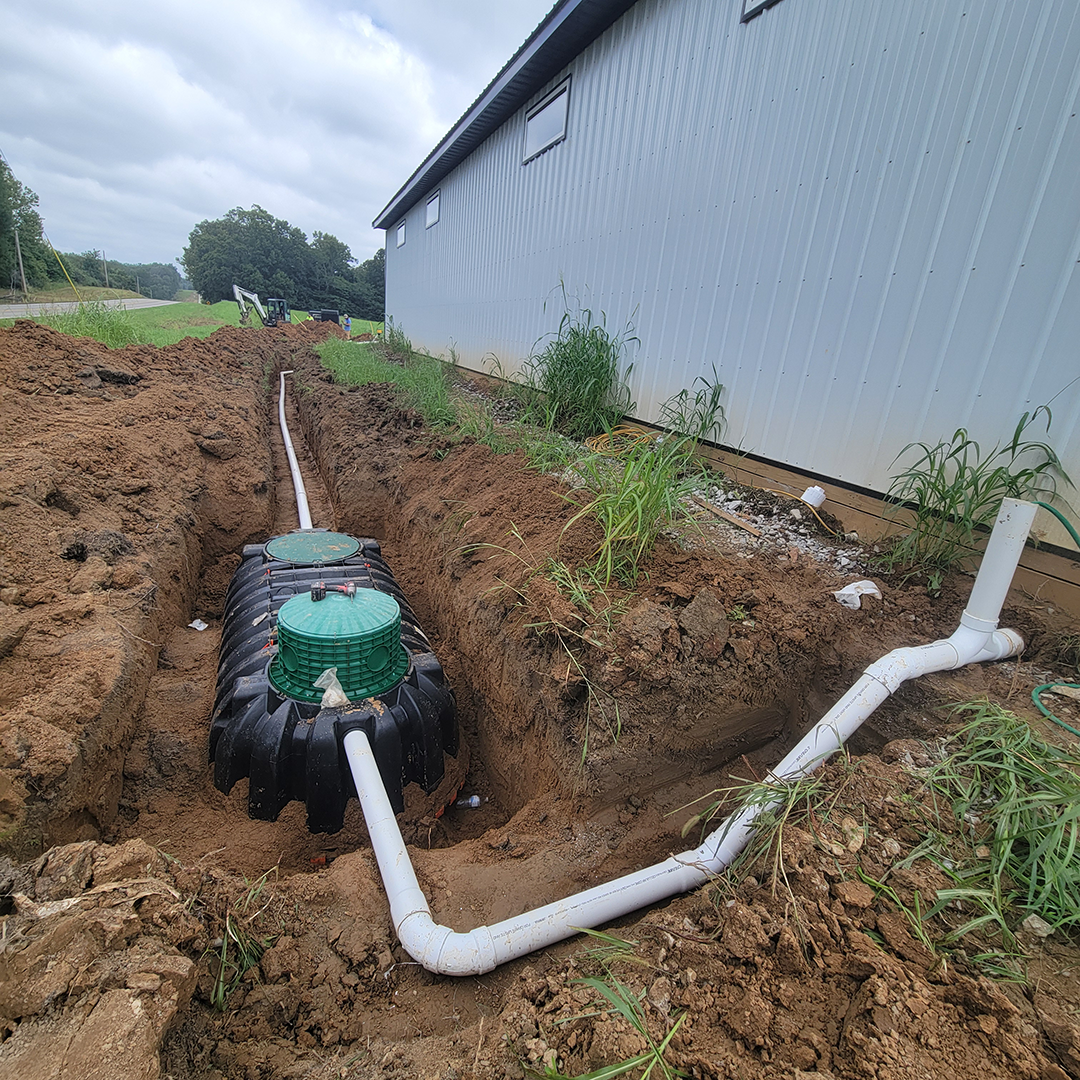

Every residential septic tank installation process begins with a proper evaluation of your property. Our team of professionals will begin by determining how large of a septic tank and drainage field you will need. This decision is influenced by a proper analysis of your yard’s soil, available space, percolation rates, and an estimated amount of wastewater that your household is likely to produce.
In order to arrive at the best solution for your home, our team of experts will perform a variety of tests during the property evaluation in order to assess the most efficient septic solution to provide your family with years of low-maintenance use. We will also be working with your local permitting authority in order to get you the best, most affordable repair options for your property.
At Skelcher-Milani, we only use high-quality materials in order to ensure that you get years of problem-free use out of your septic system. Our team of professionals will get your home’s septic system installed and working efficiently and quickly. We have years of experience in the installation of septic tanks, leach lines, stone area beds, shallow trenches, pumping stations, and more!


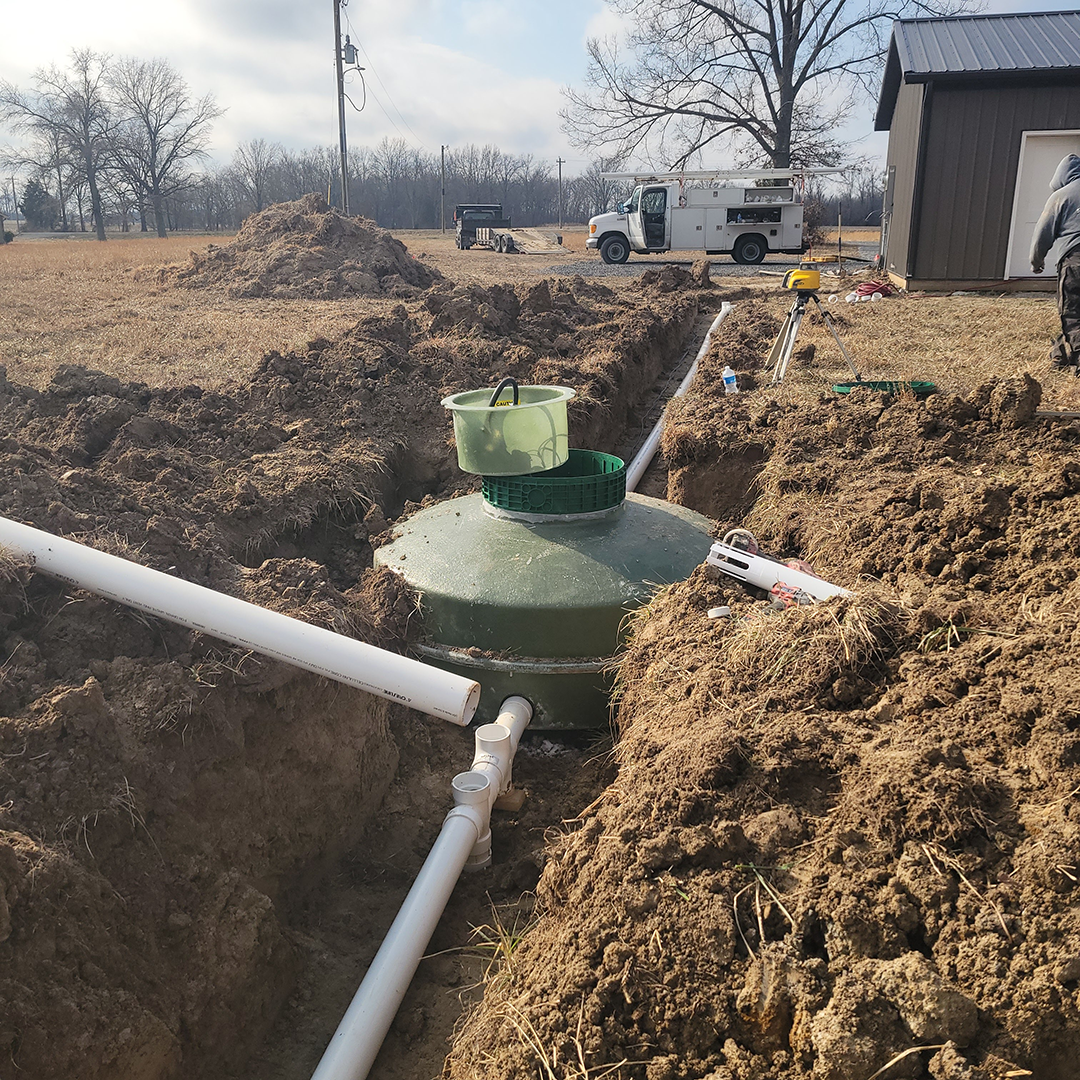
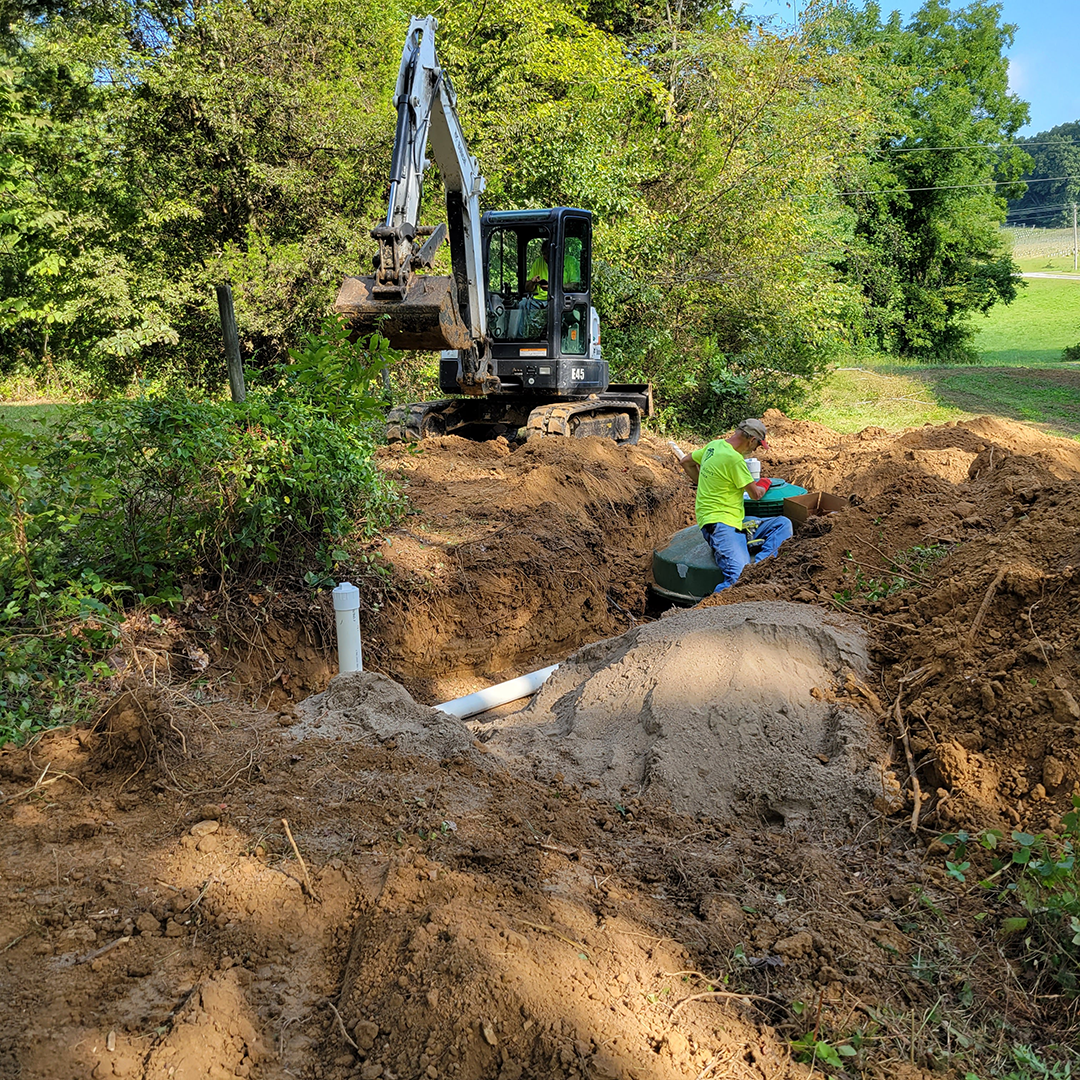
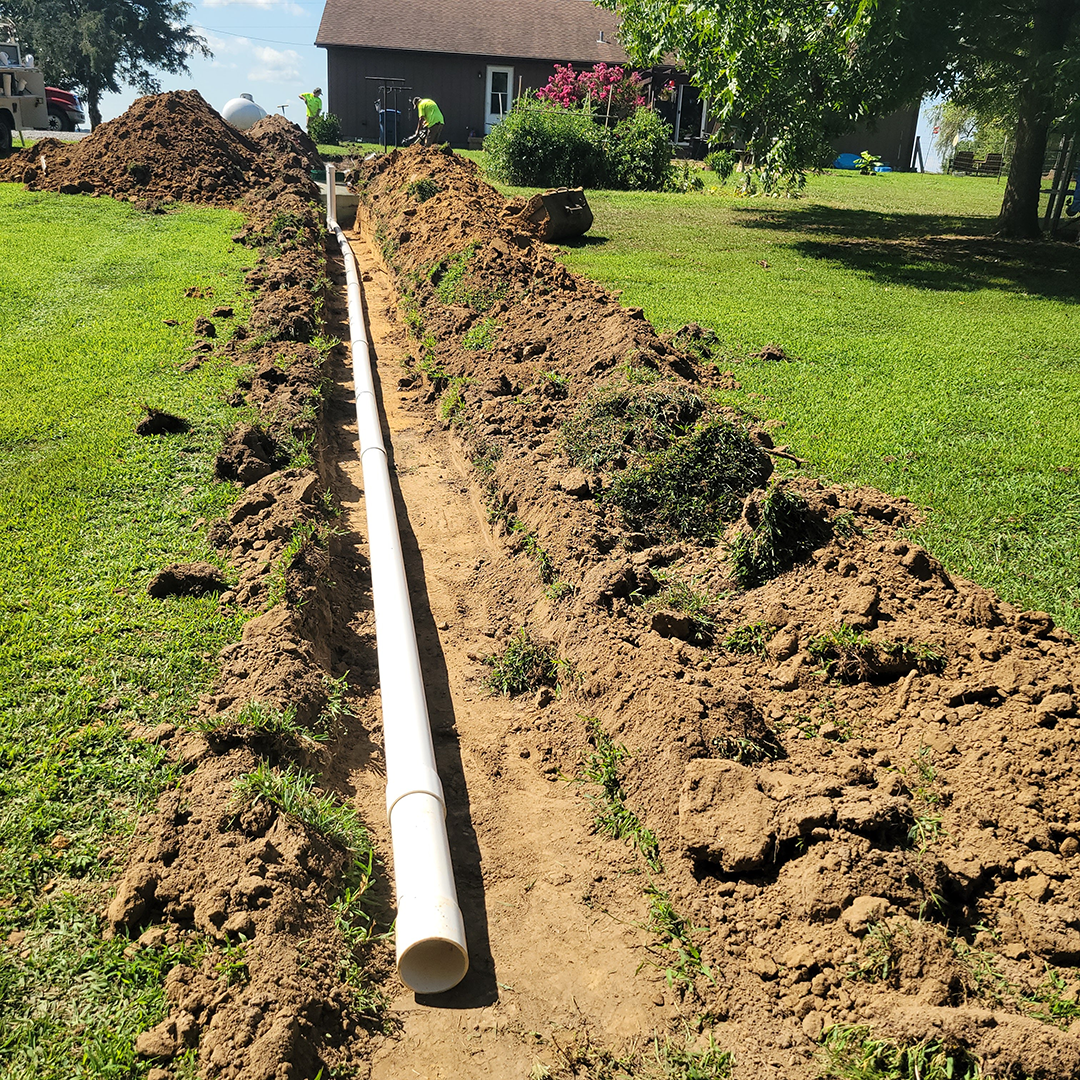
The Nayadic wastewater management system uses a fiberglass tank and internal baffling. This combination creates the treatment compartments with a small footprint. An external compressor is also used in order to supply oxygen to the aeration chamber. Nayadic systems excel in tight lot applications and can be sized to treat


The Jet Inc. residential treatment systems use the BATT media system in a concrete tank. An aeration tank motor with a submerged shaft is used to supply oxygen to the bacteria that are growing on the BATT media in the aeration chamber. The Jett system can be configured to treat 500 to 1500 gallons of wastewater a day. The tank holds approximately 1250 gallons of wastewater. This large tank offers exceptional protection from the possibility of an overloaded system during periods of high water usage.
The Multi-Flo aeration treatment system utilizes a fiberglass tank with a filter sock array. This system also uses a submerged aeration pump to supply oxygen to the aeration chamber. The filter sock array allows for the water treatment to be well-maintained. These systems can be sized to treat from 500 to 1500 gallons of wastewater a day.
Motors commonly hang inside of the tank with a shaft that sits in the water. Some systems, however, have the motors submerged in the tank. Typically, aeration compressors can be either diaphragm or vane pump types. At Skelcher-Milani, we sell only NSF-certified motors and compressors for your specific aeration system.


The motors are located at the top of the tank and are similar in appearance to each other. With Jet systems, the motors are more compact and have three sets of hangers. Whereas the motors with Norweco systems are larger in diameter and use four hangers. If you were to use a Multi-Flo system motor, it typically sits on a tripod leg assembly on the bottom of the tank, instead of hanging from the tank’s lid like Jet & Norweco. If you are in need of a replacement motor or if you want your current motor repaired, our team is here to help.
Vane-style compressors utilize an electric motor in order to spin a set of vanes which compresses the air and delivers it to the aeration chamber inside of the system. Vane compressors are found on the outside of the tank in a secure location or under a protective cover. On occasion, vane replacements and regular filter replacements and cleanings will be needed. Doing this can ensure that your system is able to work properly.


Diaphragm Compressors utilize a linear electric motor that pushes against the rubber diaphragms in order to compress air and deliver it to the aeration chamber. These compressors are typically mounted on the outside of the aeration tank in a protected location. Some units, however, can have the compressor mounted underneath the lid of the tank. Similar to vane-style compressors, these compressors need annual cleanings in order to stay at peak efficiency.
Southern Illinois clay varies widely by location.
• When installing an aeration system with surface discharge the quality of soil is not important to the system operation but impacts the ability of the soil to soak in the treated water once it hits the surface of the ground. Pure clay does not soak up water well and causes large wet spots, while loamy or sandy silty clay will absorb the water much more quickly leaving a small wet area.
• When installing a septic tank with leach field, the soil composition is extremely important. Heavy clay will simply not soak up the water and cannot support subsurface seepage or a very large field may be needed. If the clay soil is extremely sandy and silty to a deep depth, the water can run out of the leach trenches so quickly that proper treatment cannot be achieved.
• The bacteria in the ground is responsible for treating the septage. Tight of clay soil hampers oxygen transfer to the bacteria and keeps the ground too wet to treat properly. Extremely sandy soil will let the water run away before the bacteria can do its Job.
an accurate estimate.
A mound system is a method of subsurface seepage that require a shallow cut into the undisturbed soil on a site. The seepage bed is built up on this flat cut area using pipes and filtering media that is covered with soil making a bermed area on the property. In areas with extremely high water tables this system or aeration systems may be your only course of action.
From a well the farther the better. A septic tank or aeration tank is allowed within 50 feet of a well. Although the drain fields and distribution boxes must be 75 feet from a well.
* The State requires any component of a treatment system to be at least 5 feet from a property line but the treated effluent surface discharge of an aeration system, sand filter or lagoon must be 25 feet from a property line or road easement. Some counties have set greater distances for property line setbacks.
• Both system used naturally occurring bacteria to treat the effluent in a primary and secondary treatment process.
• A septic tank system uses the septic tank as the primary treatment to separate the floating material and sinking solids leaving a water column with tiny bits of grey material or broken-down solids floating in the middle. The anaerobic bacteria In the septic tank does a good job of breaking down the solids into tiny floating grey particles. The grey water flows from the septic tank to the leach field, sand filter or lagoon to complete the secondary treatment process. The aerobic bacteria in the soil surrounding the seepage trench eats up the grey particles, allowing clear water to soak into the ground. In a sand filter the bacteria lives in the filter media and completes the secondary treatment of the effluent as the water trickles out of the drip loop down through the sand filter before flowing out of the collection piping to discharge on the surface of the soil. A lagoon uses the action of sunlight, air blowing over the water surface, and bacteria living in the water and soil to achieve secondary effluent treatment before flowing out of the overflow pipe.
• Aeration systems utilize internal compartments to break down the solids in an anaerobic zone for primary treatment and support the secondary treatment bacteria in an oxygen rich zone, using air pumped into the aeration chamber. This allows both primary and secondary treatment to be accomplished in a compact unit with surface discharge.